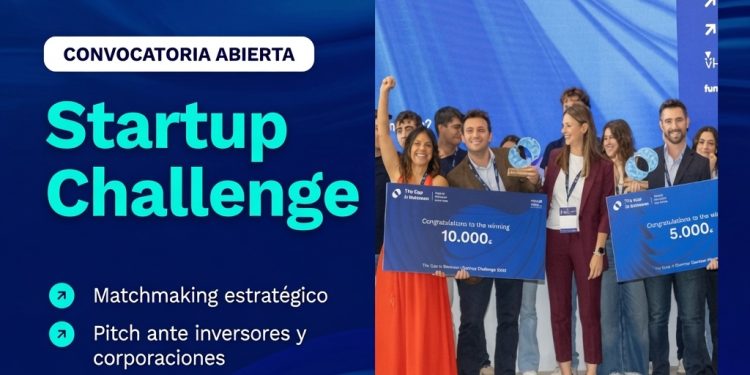
Gap in Between Startup Challenge 2026 (€10,000 prize)
This international startup challenge is designed to support entrepreneurship as a powerful driver of social and environmental transformation.
The programme seeks to identify, support and showcase startups that are developing innovative solutions to some of the most urgent challenges facing the world today. It is targeted at impact-driven entrepreneurs who are building practical, scalable and market-ready solutions across key areas such as climate, mobility, agriculture, food systems, health, wellbeing, care, and social and economic innovation.
Through the challenge, selected startups will gain access to valuable resources, visibility, strategic connections, investors, corporates and ecosystem actors. The challenge also places entrepreneurs at the centre of a global conversation about the future they are working to build: one that is fairer, more inclusive, regenerative and collaborative.
For startups working at the intersection of innovation, impact and scale, the Gap in Between Startup Challenge 2026 (€10,000 prize) offers a strong opportunity to gain international exposure, connect with relevant partners and compete for a €10,000 prize.
About the Challenge
The Gap in Between Startup Challenge 2026 is an international call created to strengthen entrepreneurship as a tool for positive social and environmental change.
The challenge is not only about recognising promising startups. It is also about connecting founders with the kind of ecosystem support that can help them grow, scale and deepen their impact. This includes access to investors, corporate partners, strategic allies, ecosystem actors and curated visibility within a European impact innovation platform.
The programme is particularly suitable for startups that are already developing validated solutions and are ready to scale internationally. It is also open to founders who are actively seeking investment, partnerships and opportunities to present their work on a wider stage.

Selected startups will become part of the Startup Challenge cohort and will participate in The Gap in Between event. Semifinalists will also have the opportunity to pitch their solutions during the event and maintain a dedicated presence at the event.
Focus Areas for 2026
For the 2026 edition, the challenge focuses on five key innovation verticals. Startups applying to the programme should be working in one or more of these areas.
1. Climate Tech & Energy
This vertical is for startups creating solutions that respond to climate change, support decarbonisation, improve access to sustainable energy, or promote more resilient and regenerative systems.
Startups in this category may be working on renewable energy, energy efficiency, climate adaptation, carbon reduction, circular economy models, environmental monitoring, climate risk management or other technologies that contribute to climate action and sustainability.
2. Smart Cities & Mobility
This area focuses on startups developing solutions for better, smarter and more sustainable cities. It includes innovations that improve urban mobility, transport systems, infrastructure, city planning, accessibility and quality of life.
Startups working on clean transport, mobility platforms, urban logistics, smart infrastructure, inclusive city services or data-driven urban solutions may find this category relevant.

3. AgriTech & Food Systems
This vertical is for startups transforming agriculture, food production, food distribution and food access. It is especially relevant for innovators working to make food systems safer, more sustainable, nutritious, inclusive and resilient.
Relevant solutions may include agricultural technology, food security innovation, supply chain systems, food waste reduction, regenerative agriculture, farm productivity tools, nutrition-focused solutions and improved food distribution models.
4. Health, Wellbeing & Care
This category supports startups building innovative solutions that improve health, wellbeing and care systems. It may include digital health, preventive care, mental health, assistive technologies, care delivery models, health access solutions and community-based wellbeing innovations.
Startups in this area should demonstrate how their solution responds to real health, wellbeing or care challenges while showing potential for scalability and measurable impact.
5. Social & Economic Systems
This vertical is focused on startups working to improve inclusion, equity, economic opportunity and social resilience. It is suitable for ventures addressing social challenges through innovative business models, technology, services or platforms.
Startups may be working on financial inclusion, education, employment, social protection, inclusive markets, access to services, community resilience or other solutions that support fairer economic and social systems.
Benefits
The benefits include:
- Curated Matchmaking: Selected startups will benefit from curated matchmaking with investors, corporates and ecosystem actors. This gives founders the opportunity to connect with stakeholders who may be relevant to their growth, funding, partnerships or market expansion goals. For startups seeking strategic partnerships or investment opportunities, this can be one of the most important benefits of the challenge.
- Participation in The Gap in Between Event: Selected startups will participate in The Gap in Between event. This provides an opportunity to engage with a wider ecosystem of innovators, investors, corporates, partners and other stakeholders interested in social and environmental transformation. The event creates a platform for founders to present their work, build relationships and gain exposure within a strong impact-focused environment.
- Visibility Within an Impact Innovation Ecosystem: Selected startups will gain visibility within a curated ecosystem of impact innovation. This is important for startups that want to increase their credibility, attract partners and position their solutions before relevant audiences. Visibility within the right ecosystem can support future fundraising, partnerships, market access and strategic collaborations.
- Pitch Opportunity for Semifinalists: Semifinalists will be invited to present their solutions in pitch sessions during the event. This creates an opportunity for startups to communicate their value proposition, demonstrate traction and explain the potential impact of their innovation. A strong pitch can help founders attract investor interest, build strategic relationships and strengthen their market positioning.
- Dedicated Presence at the Event: Semifinalists will also have a dedicated presence at the event. This allows participating startups to showcase their solutions more directly and engage with stakeholders attending the event. For founders, this can be useful for building visibility, strengthening networks and creating meaningful conversations around their work.
- €10,000 Prize: One startup will be selected as the winner and will receive a €10,000 prize. This funding can provide useful support for product development, market expansion, operational needs, partnership development or other growth-related activities.
Eligibility Criteria
The programme is looking for:
- Impact-Driven Startups: Applicants should be startups working on solutions with clear social or environmental impact. The programme is particularly interested in startups across climate, mobility, health, food and social innovation.
- Founders Seeking Investment or Strategic Partnerships: The challenge is suitable for founders looking to connect with investors, corporates and strategic partners. Applicants should be ready to engage with stakeholders who may support their growth, market access or scaling journey.
- Startups With Validated Products or Market Traction: The programme is looking for startups that have gone beyond the idea stage. Applicants should have validated products or evidence of market traction. This may include a working product, pilot results, paying users, customer validation, partnerships, revenue, adoption data or other evidence showing that the solution is relevant and has potential.
- Teams Ready to Scale Internationally: The challenge is also designed for startups that are ready to scale their solutions internationally. Applicants should show that their model has the potential to grow beyond their current market and address challenges at a broader level.
Application Deadline: 14 July 2026
Also Read: Other Opportunities to Apply